Port & Parcel

Canadian ports, freight and logistics

Follow the movement.

Port & Parcel follows freight through Canadian waterfronts, inland connections and waterways. Discover container terminals, bulk cargo, Seaway locks and icebreaking services in articles that explain the infrastructure and coordination behind a shipment, supported by port authorities and public agencies.

File 01

Intermodal freight

A container terminal is a meeting of transport systems

The stacks beside a container ship are only one part of a terminal. Berths, cranes, storage areas, truck gates and rail tracks work together. Montréal's port references show how this arrangement connects an ocean journey with the next stage across the continent.

Read the story
File 02

Cargo and storage

Why bulk cargo gives the waterfront a different shape

Some freight reaches a port inside a container. Other cargo moves as grain, mineral material or liquid, using different storage and handling systems. Canadian grain definitions and Montréal's waterfront interpretation explain why silos, warehouses and tanks belong to different parts of the journey.

Read the story
File 03

Waterway engineering

How a ship climbs through the St. Lawrence Seaway

The Great Lakes do not sit at sea level, and a ship cannot simply follow a flat channel from Montréal to every inland port. The St. Lawrence Seaway uses locks and canals to connect water bodies at different elevations along a shared Canadian–American route.

Read the story
File 04
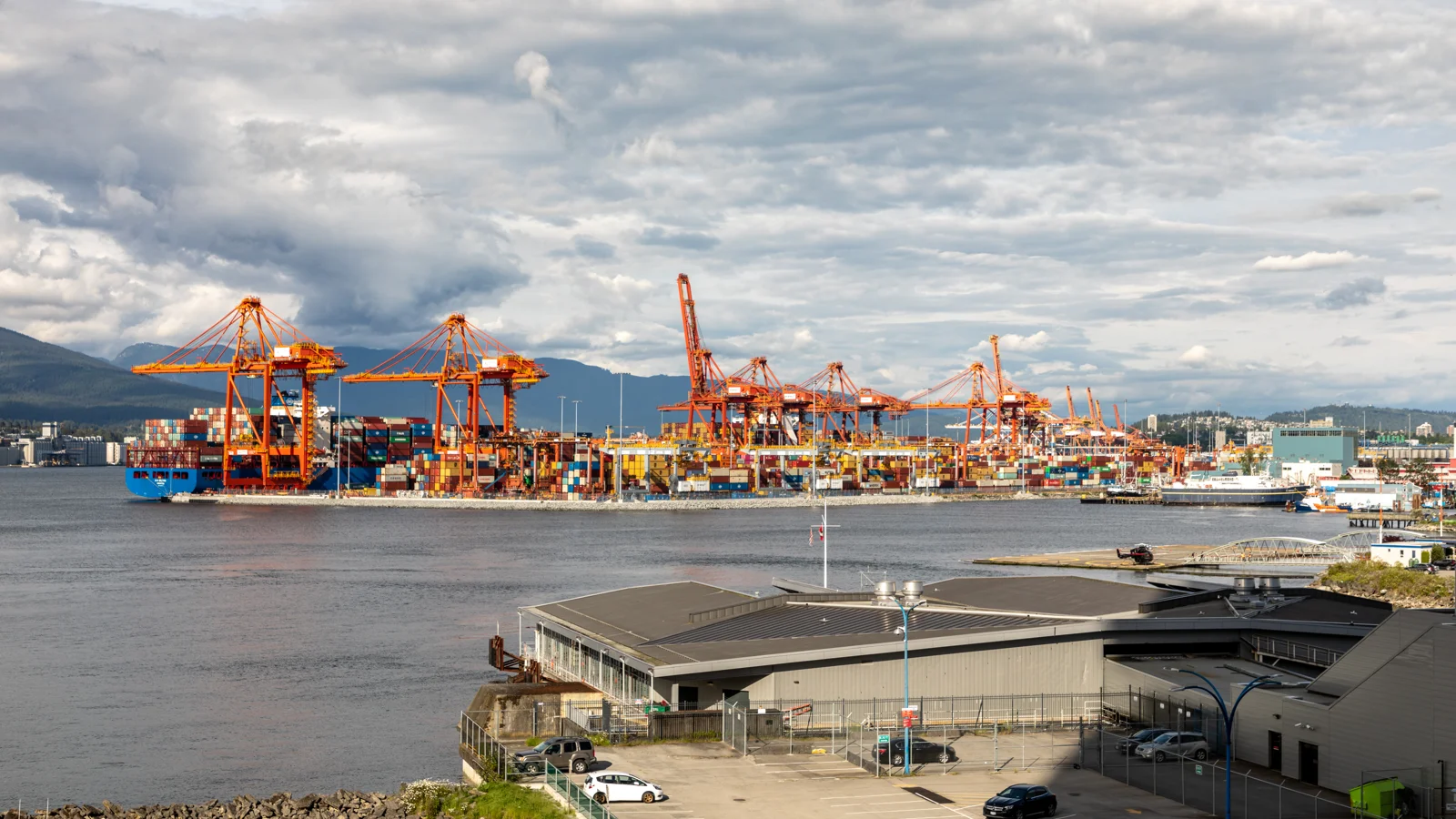
Orange container cranes at Vancouver Centerm Terminal across the harbour.
Vancouver Centerm Terminal, photographed in 2022.Dietmar Rabich · CC BY-SA 4.0
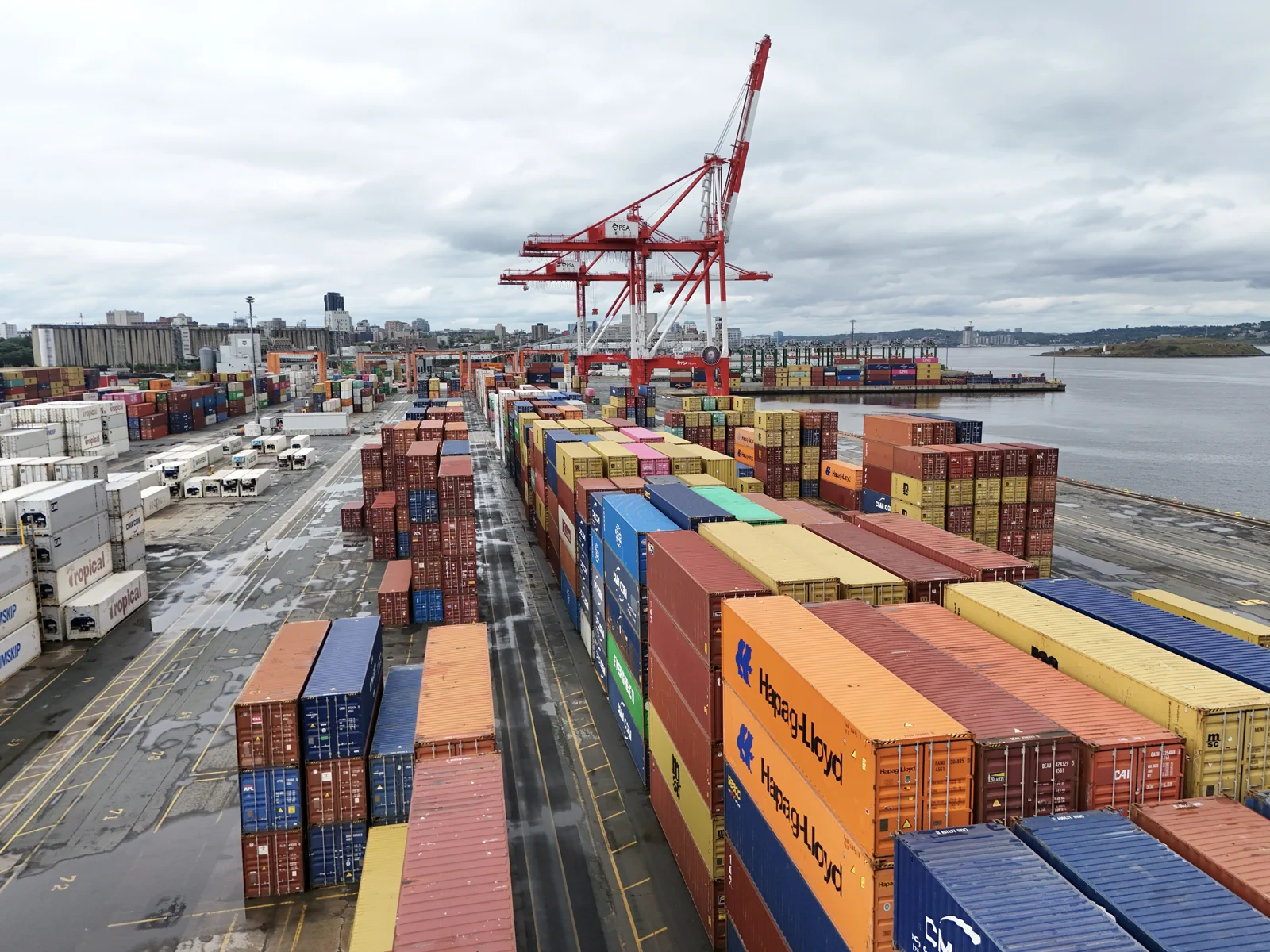
Rows of shipping containers and red cranes at a Halifax container terminal.
PSA Halifax Atlantic Hub at the Port of Halifax, photographed in September 2024.Quintin Soloviev · CC BY 4.0